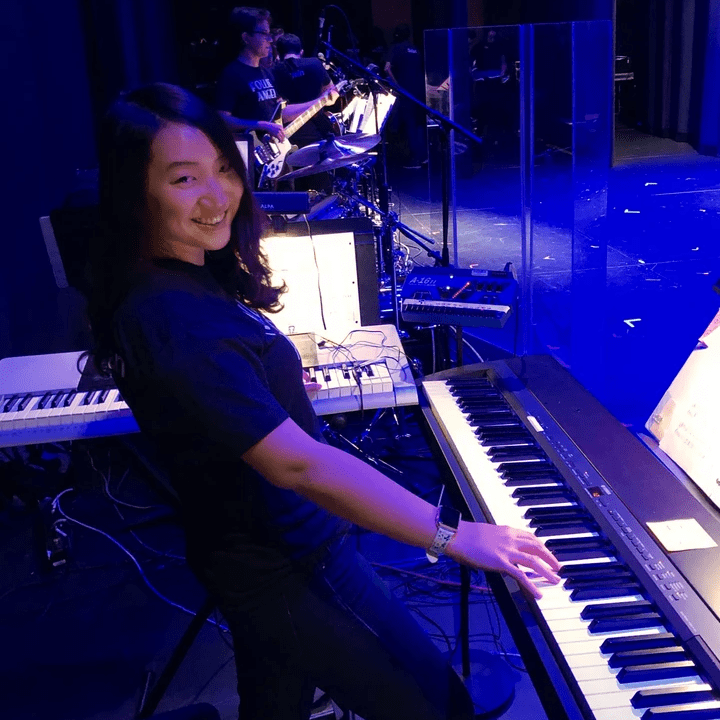
Hello! I'm Susie.
Growing up in an engineering family, I spent hours watching my mom transform ideas into technical drawings for oil refineries. At the University of Chicago, I applied this mindset to teaching Python robotics at local middle schools, helping students move past their fear of code to turn their ideas into physical reality. These experiences made me interested in making complex technology easier for people to understand and use.
After college, I started my career at Deutsche Bank as a financial engineer, where I built quantitative models and structured exotic derivatives for insurance companies across $13B in client deals. Finance taught me to be rigorous because seemingly small assumptions could have consequences worth millions of dollars. I enjoyed solving difficult quantitative problems, but I became more interested in building products and experiences that people could interact with directly.
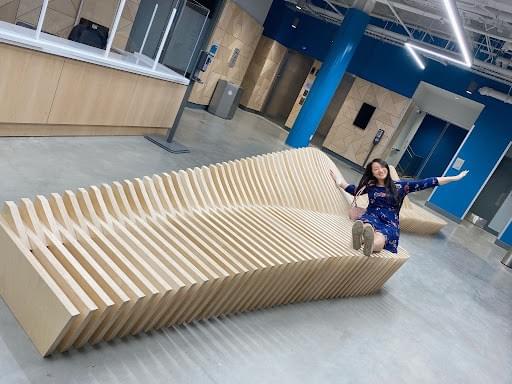
I went to Wharton for my MBA and spent much of my time studying product design, machine learning, and engineering. I built everything from AI experiments to furniture, including a wooden bench that won the Wharton Furniture Competition and now sits in the lobby of Tangen Hall. Those experiences gave me a chance to combine technology with my interests in design and human behavior.
After graduating in 2020, I joined Amazon and have since built products across retail marketplace, smart home, and AI. I started out leading the launch of Amazon Associates and Programmatic Marketing features for Amazon retail marketplaces in Sweden, Poland, and Egypt. After that, I worked with engineers, designers, and researchers to conceptualize and build Echo Hub smart home control device from 0 to 1 and was named one of TIME’s 200 Best Inventions of 2023. Today, I am a Senior Product Manager Technical at AWS, where I build AI agents for 140K+ AWS partners across 200+ countries, including AWS Partner Assistant and agentic experiences that combine generative AI, personalization, knowledge, and AWS APIs.
Outside of work, I like using technology to solve problems I encounter in my own life. I built an AI Architect that can draw construction plans for a home renovation project, a trading agent that writes code to backtest my investment ideas, and Story for Xixi, an AI reading buddy I built for my 20 months old daughter that turns physical picture books into interactive conversations. I also enjoy industrial design, woodworking, streaming economics with virtual characters, and music production. My economics videos have reached 5M+ views and 88K+ followers, and I have written more than 30 songs.
Education

The Wharton School, the University of Pennsylvania
MBA (2018-2020)
Certificate in Integrated Product Design

The University of Chicago
BA with Honors in Economics (2011-2015)

Tangen Hall Furniture Competition
Let's Go Surfing | Winner 2020
How might we create an environment that triggers more spontaneous conversations in the new entrepreneurship building at Penn? I designed this interactive, multi-functional wooden bench with my team to bring Hawaiian beach waves to our Philadelphia campus.
***Update***
After a year of effort, I finally made this bench with the help of Philadelphia Precision CNC. It's now sitting in the lobby of Tangen Hall, the new entrepreneurship building on the UPenn campus! See photo here.
#PatentProduct #CADModeling #LaserCut #ProductDesign

Y Prize New Venture Competition
VivoDish | Runner-up 2019
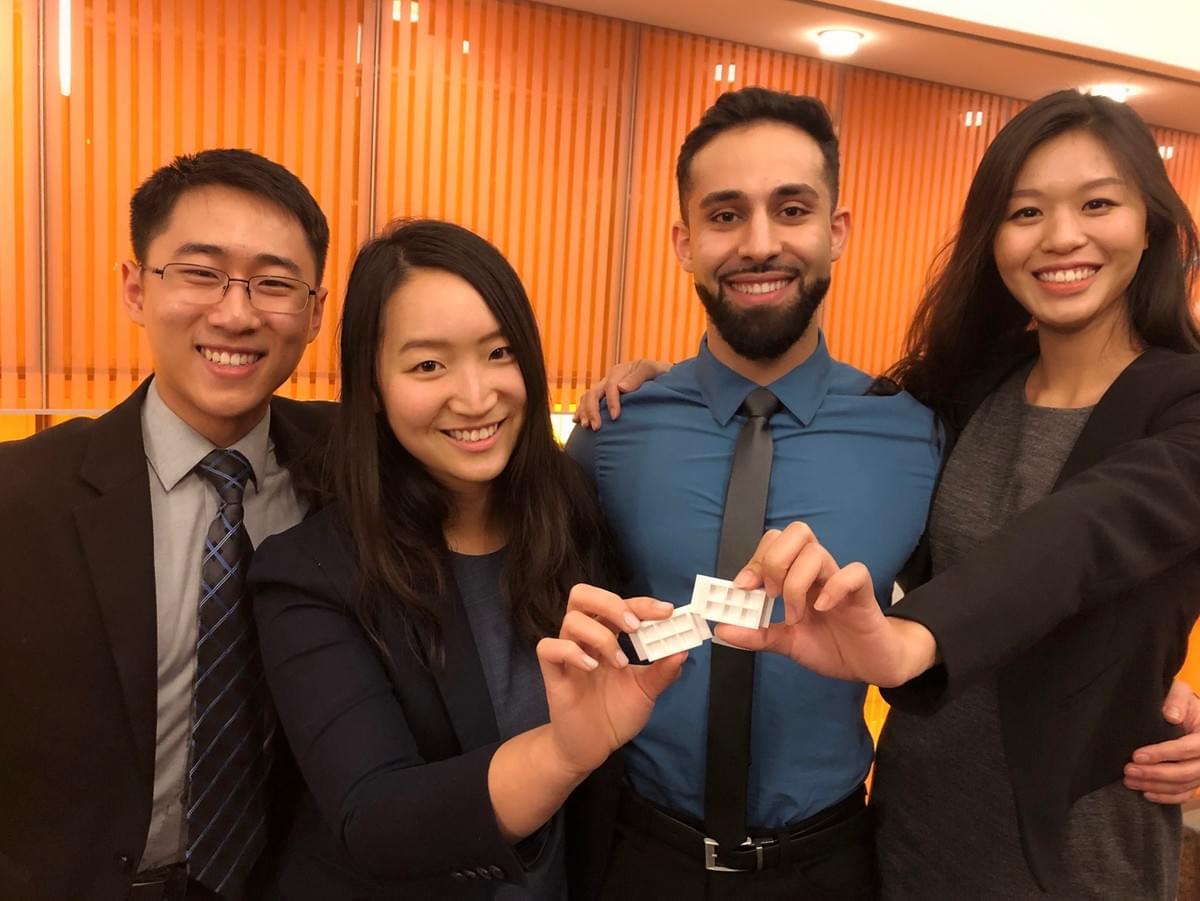
Traditionally, hospital labs use flat culture dishes to grow tissues. Cells end up growing in a way that looks like a spaghetti mess instead of an organized tissue structure. Textured surfaces enable aligned cell growth, enabling realistic tissue engineering out of the body.
With scalable nanowrinkle technology invented at UPenn, I designed a smart cell culture dish using 3D printing with my team to bring tissue engineering from benchtop to bedside (real patients). Learn more here.
#PatentProduct #BusinessDesign #Biotech #3DPrint

Grand Prize Winner 2018
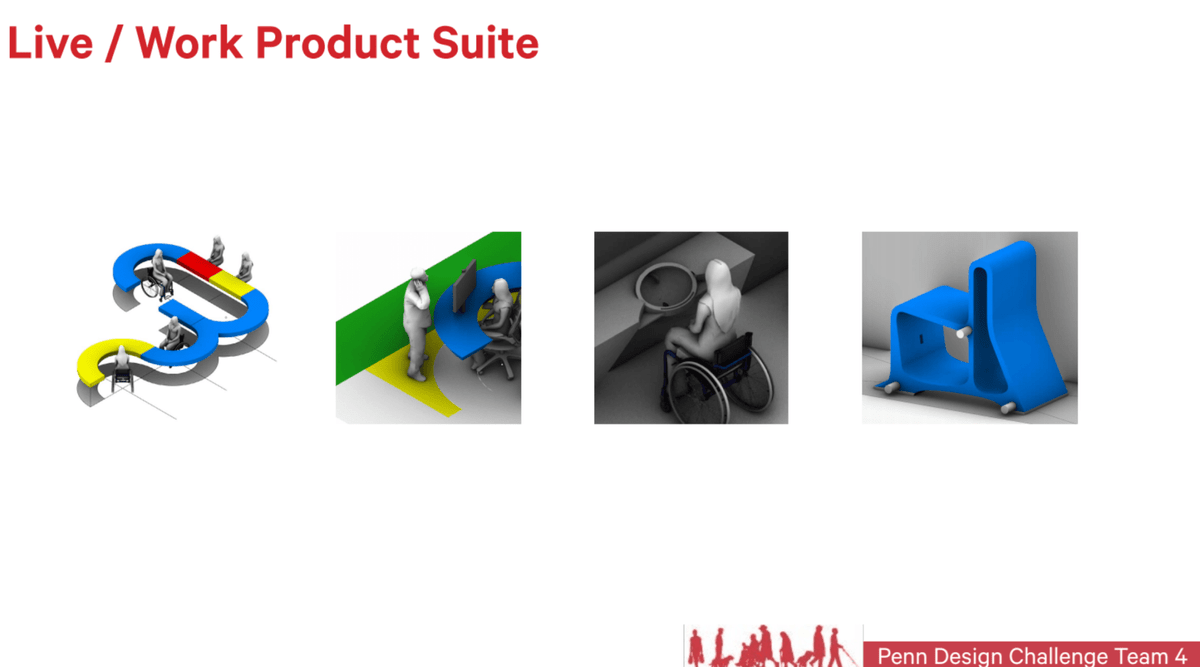
How might we create an environment to help Michael, who's recently disabled, to feel empowered about his current state of being so that he's more confident?
Currently, accessible shower chairs are medical looking and unstable. I designed this lightweight, sturdy, and water-proof shower bench with my team of designers and engineers at Penn. It fits into any modern bathroom designs while serving the special needs of wheelchair users. Learn more about my inclusive workspace product suite here.
#PatentProduct#InclusiveDesign #Workspace #3DModel
Selected Projects
"Experience is the sum of our interactions with the world around us."
Here's a collection of things I’ve built outside of work.
Building an AI reading buddy for toddlers
Story for Xixi | Independent Project 2026
I built Story for Xixi as an AI reading buddy for my 20 months old daughter. Parents read a physical picture book with their child while Mimi, a playful cat character, joins the conversation. Mimi narrates each page, asks questions based on what the child can see, and builds on the child’s response. I wanted AI to make shared reading more engaging and personalized while keeping the physical book and parent child interaction at the center of the experience.
I started this project after reading research on early childhood development and reflecting on my own experience as a parent. The NIH describes the first three years of life as the most intensive period for acquiring speech and language skills, while the American Academy of Pediatrics recommends shared reading from infancy because it supports language, cognitive, social emotional, and literacy development. As a parent, I also found that creating a rich conversation around a book takes much more effort than simply reading the words on the page. I had to keep my toddler engaged, come up with age appropriate questions in the moment, interpret unpredictable responses, and introduce new ideas while still staying present in the story.
I first built a simple prototype that let Mimi add narration and questions to books, then tested it while reading with my daughter. During those sessions, I kept reaching for the laptop to repeat Mimi, tell Mimi that my daughter had responded, or move to the next interaction. Those actions interrupted the natural rhythm of reading, so I redesigned the experience to reduce device interaction. A parent can now hold up an open palm to ask Mimi to repeat herself, give a thumbs up when the child responds, or make a V gesture to continue. A parent can also simply turn the physical page, and Story for Xixi advances automatically. Mimi never tests or grades the child. She accepts speech, pointing, gestures, expressions, imitation, and other forms of engagement, then uses the parent’s signal to take the conversation one step deeper.
Technically, Story for Xixi uses GPT-5.6 Luna to analyze photographs of each physical book and extract printed text and visual page evidence. SQLite stores that evidence alongside child profiles, reading history, rewards, and feedback. A separate Authoring Agent powered by GPT-5.6 Terra uses an agent harness to assemble context, apply a versioned system prompt, validate Structured Outputs, and generate narration, questions, and follow ups. Long term memory comes from the child profile and reading history, including language ability, interests, and learning preferences, while short term memory combines the current book, page evidence, story continuity, and relevant child context. CosyVoice 3 pre generates Mimi’s Mandarin narration. MediaPipe Gesture Recognizer processes parent gestures locally in the browser, while deterministic image difference logic detects physical page turns. This architecture keeps generative AI in the content preparation and personalization layer rather than the live reading loop, which makes the experience faster and keeps the camera feed local.
I started Story for Xixi to make reading with my toddler easier, but I see a much larger opportunity over time. As a child grows, their AI reading buddy could remember what they understand, what interests them, and how they learn, then introduce increasingly sophisticated language, reasoning, numeracy, music, and other forms of learning. I want parents and teachers to remain at the center of a child’s development while AI gives more families access to the continuity and personalization of a devoted one on one tutor.
#AI #GenerativeAI #AIProduct #AgenticAI #EdTech #EarlyChildhood #ComputerVision #VoiceAI #ProductDesign #HumanComputerInteraction
Building an AI Architect for Construction Planning
Architex AI | 2024-2025
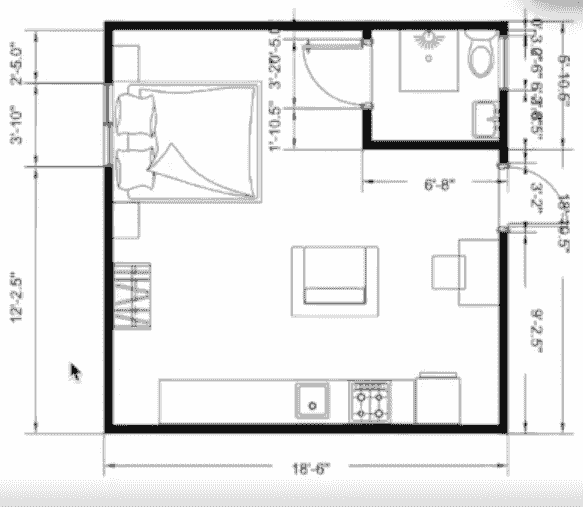
An AI-powered platform that transforms project requirements and sketches into editable architectural floor plans and construction drawings. The image here is a sample floor plan generated by our prototype.
According to my interviews with 20+ architects, real estate developers, general contractors, and homeowners, creating construction documentation is repetitive, time-consuming, and expensive. Traditional workflows can take months, while professional design tools are often difficult for non-architects to use.
After prototyping and testing different approaches, I worked with my cofounders to develop ArchiteX AI to automate parts of the architectural planning process. The platform combines generative AI with algorithmic space planning to generate multiple floor plan options, optimize furniture layouts, and export editable DXF drawings, along with design rationale, cost estimates, and construction timelines.
Technically, ArchiteX AI combines a React-based interface with a Python generation pipeline. We used Claude through the Anthropic API to interpret spatial requirements, py3dbp to optimize furniture placement and prevent overlaps, and ezdxf to generate editable DXF floor plans that can be opened and refined in tools such as AutoCAD. The system connects AI reasoning with deterministic spatial algorithms to turn user requirements into both visual previews and production-ready vector drawings.
#AI #Architecture #GenerativeAI #ProductDesign
#Automation #FloorPlan #PropTech #ConstructionTechBuild for Socially Distanced Communications
Project Empathy Writer | Applied Machine Learning with Prof. Dan Roth, 2020
In a world where technology has enabled us to connect with others remotely in the fastest and most convenient way, surprisingly few tools exist to make sure each conversation truly counts.
This problem has got more acute especially during this period of COVID-19. Survey data shows that long-distance couples exchange on average 343 texts a week, yet over 58% break up by the 4 months mark, with "lack of communication" as the biggest challenge.
How might we write in a way that resonates, so that nothing gets lost in translation?
My team and I have built a Natural Language Processing algorithm, the “Empathy Writer”, to enhance long-distance communications by showing the writers how their tone might be perceived by the readers and making conversations more enjoyable with predictive emojis.
First, over 300,000 lemmatized tweets are processed into features, including Bag of Words, TF-IDF, word orders, locations, and context tags. These features, along with emoji labels, then pass through Long Short-Term Memory (LSTM) and Naive Bayes models to train the Empathy Writer.
The resulting machine predicts emojis with high accuracy of 59%, which beats humans by a shocking 15%. This surprising finding implies that AI can not only help us get things done but also empower us to empathize with each other on a much deeper level.
Read our paper here.
#DeepLearning #NLP #MachineLearning #LSTMNetworks #NaiveBayes #AugmentedReality #Python
Designing the future of campus recruiting v2
Project DINA | JD AI Innovation Lab, 2018
How might we better the campus recruiting experience, especially for students in remote campuses?
My answer: an AI made from delivery boxes.
I designed DINA with my team to create a humorous and scrappy robot that connects naturally with her audience.
#AI #VoiceProduct #InteractionDesign #UI/UX #FacialRecognition #NLP #TTS #ASR
Designing for the disabled
Super Mario | PennDesign Challenge 2018
How might we create an environment to help Michael, who's recently disabled, feel empowered about his current state of being so that he feels more confident to connect with others?
Our team has interviewed four disabled people and three staff from the Inglis House in Philadelphia and New York department of transportation and designed a new way for the disabled to play their favorite games.
Talk to the play station to register your customized gestures for left, right, forward, and backward. Play games with others and make new friends!
#GameDesign #InteractionDesign #UX #GestureRecognition
Designing the future of campus recruiting v1
Project Dina | JD AI Innovation Lab 2018
The first gen of our AI Campus Ambassador DINA.
According to interviews, most university students in China think JD as a traditional online retailer, not an innovative technology company. The company needs to change this perception to attract top candidates to join.
After prototyping and testing different online and offline solutions, we decided to focus on creating a memorable offline recruiting experience in the form of a "campus ambassador" that answers questions from students.
#AI #VoiceProduct #InteractionDesign #UI/UX #FacialRecognition #NLP #TTS #ASR
Interests

Virtual Avatar Streaming
I started experimenting with VTubing (streaming with a virtual avatar) in 2021 as a way to make economics more visual, playful, and approachable. I created original 2D and 3D virtual avatars and used them to explain economic ideas through livestreams and videos, combining research, storytelling, character design, animation, and technology into one creative format. Here's a 3D character I built in Unity and controlled using Quest VR headset and hand trackers!
What began as a personal experiment grew into a community of 88K followers and more than 5M views!

Music Production
I’ve been telling stories through songs since I was little, using music to capture people, places, and moments I want to remember. I have produced and published 8 original songs so far.
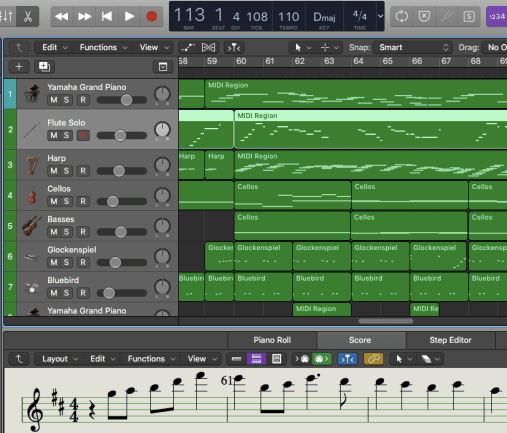
One of my favorite experiments is 《原梦纪》(Chronicle of Dreams), an original fan song I wrote, composed, arranged, produced in Logic Pro, and performed for Genshin Impact’s second anniversary. I sang alongside virtual singer Luo Tianyi (洛天依), bringing together my love of songwriting, music production, and virtual characters in one piece.

Outdoor Adventures
I'm a lover of great outdoors. It all started from a month of camping in the Sonoran Desert as a cacti researcher in 2012. Since then, I have hiked through Jurassic coast, Tibetan highlands, the Isle of Skye, the Giant Causeway, the Dolomites, Patagonia, and the Antarctica. Where's my next venture?
Woodworking
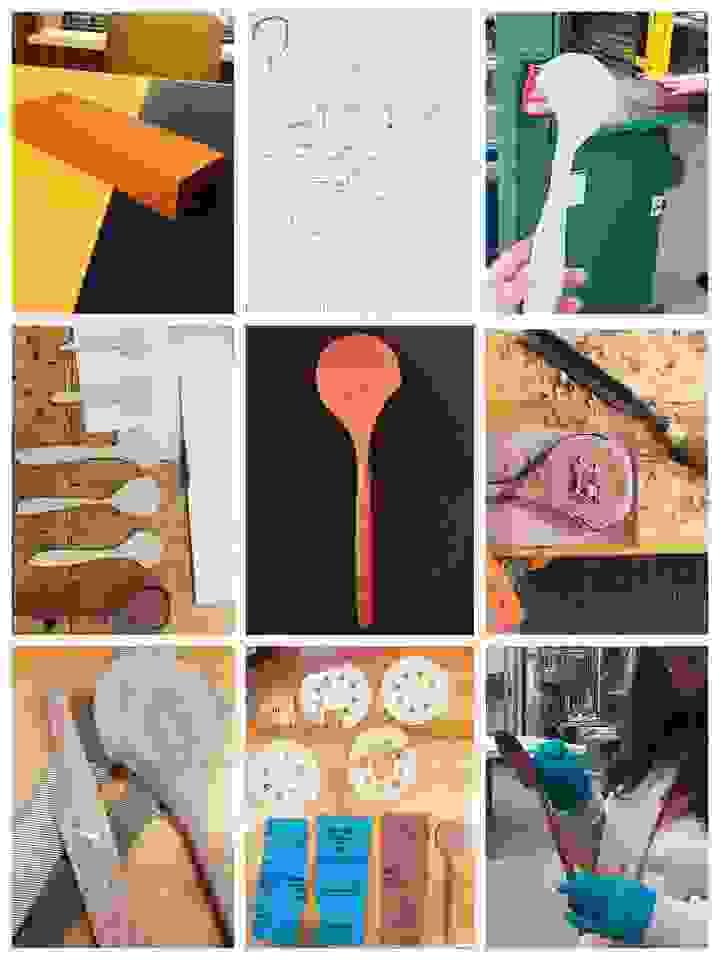
I like making everyday objects a little more delightful. Spife started with a simple observation: people rarely use the bottom-right corner of a spoon. I hand-carved a piece of mahogany into a spoon–knife hybrid, keeping the warmth and comfort of a wooden spoon while adding an edge that can cut, fillet, and pick out small fish bones. After six hours of sanding, it became one of those objects that was as satisfying to hold as it was to use.

Home Cooking
Joy is light, playful, colorful, and carefree. Cooking is my way of expressing that simplest form of joy to my loved ones.

Band
I love the stage and had the best time jamming with my bands at Wharton. Music is like a magical solute. It breaks down the walls among people from different backgrounds then bond them together.

Singing
I love bringing a smile to others by singing for them. Listen to my solo of Circle Game with ladies from Unaccompanied Women.
Let's Chat!